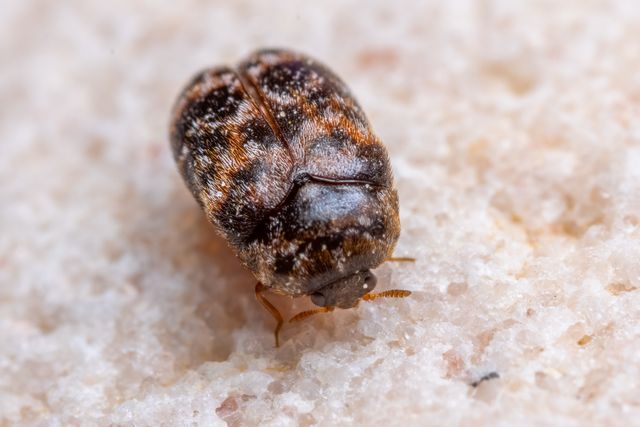
Carpet beetles are small, inconspicuous insects that cause disproportionate damage to natural fiber materials in your home. The adults are harmless — it’s the larvae that destroy wool carpets, silk garments, leather goods, feather pillows, and even taxidermy. By the time you notice holes in clothing or bare spots in carpeting, the infestation has likely been active for months. Early identification and systematic treatment are essential.
Identifying Carpet Beetle Damage
Carpet beetle damage differs from moth damage in several ways. Carpet beetle larvae create irregular holes and patches rather than the clean round holes made by clothes moths. You’ll often find shed larval skins — tiny, hollow, bristly casings — near damaged items. The larvae themselves are small, fuzzy, and caterpillar-like, usually brown or tan with distinctive bristles. Adult carpet beetles are round, about the size of a pinhead, and can be solid black or patterned with white, brown, and yellow scales.
Carpet beetles and pantry moths are frequently confused with each other. If you’re finding damage to food products rather than fabrics, you may be dealing with a pantry moth issue instead — learn to
prevent pantry moth infestations for the correct identification and treatment approach.
Where Carpet Beetles Hide
Larvae avoid light and prefer undisturbed areas. Common hiding spots include the back corners of closets, underneath heavy furniture, along carpet edges near baseboards, inside heating vents, behind picture frames, and in stored clothing boxes. They’re particularly attracted to items soiled with food stains, perspiration, or body oils, since these provide additional nutrients.
Elimination Strategy
1. Thorough Vacuuming
Vacuum every carpeted surface, paying special attention to edges along baseboards, underneath furniture, and inside closets. Use the crevice tool to reach into corners, vents, and along shelf edges. Empty the vacuum canister or bag into an outdoor trash receptacle immediately after vacuuming — larvae can survive inside the vacuum.
2. Launder and Heat-Treat Affected Items
Wash all potentially affected clothing, linens, and fabric items in hot water (at least 120°F) and dry on high heat for 30 minutes. For items that can’t be washed — like wool suits, silk ties, or fur — dry cleaning kills all life stages. Alternatively, place items in sealed plastic bags and freeze them at 0°F for 72 hours.
3. Apply Residual Insecticide to Edges and Crevices
After vacuuming, apply a residual insecticide labeled for carpet beetles along baseboards, carpet edges, closet perimeters, and inside heating vents. Focus on crack-and-crevice application rather than broadcast spraying. Boric acid powder is an effective low-toxicity option for dusting into carpet edges and vent interiors.
4. Protect Vulnerable Stored Items
Store off-season clothing in airtight containers or vacuum-sealed bags. Cedar blocks and lavender sachets provide mild repellent properties but won’t kill an active infestation on their own. For valuable textiles like heirloom quilts or vintage clothing, acid-free tissue paper inside sealed containers provides the best protection.
Long-Term Prevention
Regular vacuuming is the single most important preventive measure against carpet beetles. Vacuum carpeted rooms at least twice per week, focusing on edges and underneath furniture. This removes larvae, eggs, and the organic debris they feed on. Combine this with general pest exclusion — the entry-point sealing techniques in our guide to
seal entry points against spiders also keep carpet beetles from entering your home.
In homes with pets, shed hair and dander accumulate rapidly and provide food for carpet beetle larvae. If you also notice gnaw marks on baseboards or small droppings in closet corners, you may have a concurrent rodent issue — check for
signs of rodents behind walls to rule out a secondary problem.
Ongoing Maintenance
- Vacuum all carpeted areas at least twice weekly, especially edges and corners
- Launder or dry-clean seasonal clothing before storing
- Store off-season items in airtight containers or vacuum-sealed bags
- Inspect stored textiles every three months for signs of damage
- Clean heating vents and replace HVAC filters regularly
- Remove bird nests and wasp nests near the home — they’re carpet beetle sources
Carpet beetles are a persistent pest that requires ongoing vigilance, but consistent vacuuming and proper textile storage reduce the risk dramatically. Addressing an infestation early prevents the hundreds of dollars in fabric damage that comes from letting these pests go unnoticed.